¿Altcoin? ¿Hard fork? ¿Initial coin offering (ICO)? Those of us who work in the digital environment know that many acronyms and anglicisms are commonly used to define concepts in the digital ecosystem. This article is a glossary of digital terms with a compilation of some of the most common terms used in the internet business based on the basic concepts of cryptocurrencies and blockchain, with a brief explanation of each one, but keep in mind that there are many more.
Here is our glossary of basic cryptocurrency and blockchain concepts with the main concepts that we use in our daily lives. Whether it’s when we work with our clients, make presentations or even in our blog posts.
If you are looking for a specific word, we recommend using the shortcut “ctrl + F”
Glossary of basic cryptocurrency and blockchain concepts
With the A
Airdrop
Free distribution of tokens to the cryptocurrency wallets of certain users, with or without prior notice. It is usually carried out to reward loyal users, or to create a buzz about a particular token.
Altcoin
Term used to describe alternative cryptocurrencies to Bitcoin, such as Litecoin and Ether. Altcoins usually arise from forks of Bitcoin’s software code rather than Bitcoin’s own blockchain (sometimes changing the number of coins, using a different hashing algorithm or adding some other new feature), but many innovative altcoins (e.g. Ethereum, Monero, NEO, IOTA and others) use computer code and blockchain completely independent of Bitcoin.
Asset-backed tokens
Asset-backed tokens reflect an underlying physical asset, such as gold.
Asset tokens
These tokens represent assets such as a debt or equity claim on the issuer. For example, a share in the company’s future profits or future capital flows, and may be marketable as investments.
ASIC
An “application-specific integrated circuit”. It is a silicon chip dedicated to a specific purpose rather than a general purpose use, such as performing the hashing algorithm, used to secure a proof-of-work blockchain. ASICs are more efficient at performing those specific-purpose tasks than general-purpose chips (it is now only feasible to mine Bitcoin using an ASIC).
Atomic swap
A separate blockchain cryptocurrency exchange without the use of a centralized intermediary. These types of exchanges are usually carried out through enabled wallets and smart contracts.
With the B
Bag
Term used to refer to the possession of a significant amount of a specific cryptocurrency by an individual.
Bitcoin (BTC)
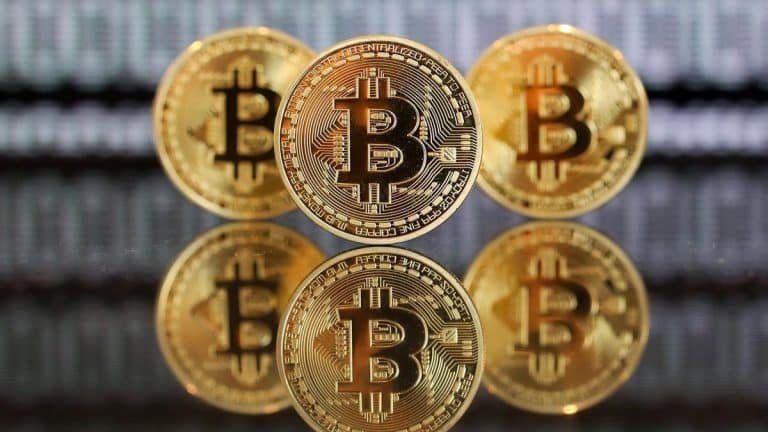
The first and best known cryptocurrency created by Satoshi Nakamoto. It is a proof-of-work cryptocurrency facilitated by a blockchain.
Bits
A subunit of a Bitcoin. There are 1 million bits in a Bitcoin.
BIP
A “Bitcoin Improvement Proposal”. This is a technical design document that provides information to the Bitcoin community, describing proposed new features, processes or environments that affect the Bitcoin protocol. Suggested changes to the protocol are presented as a BIP. The author of the BIP is responsible for soliciting comments.
BitcoinMaximalist
A person or entity that believes that only the Bitcoin cryptocurrency deserves to survive in the long term out of all the cryptocurrencies on the market.
Block (Bloque)
Packets of data recorded on the blockchain. It provides a lot of important information about itself, including its hash, the hash of the previous block, the time stamp, the difficulty and its reward.
Blockspace
Como el tamaño de los bloques suele ser limitado, hay un límite en el número de transacciones que pueden procesarse a la vez. This creates a supply and demand market between miners, mining pools and users of a blockchain. The commodity in this market is often referred to as “blockspace”, and is usually related to where such space is in high demand and therefore has a higher cost in gas rates (e.g., as with Ethereum‘s blockspace).
Block explorer – Explorador de bloques
Online tool that allows you to search for current and historical real-time information about a blockchain, including blockchain-related data, transactions, addresses, hash rate and more.
Block – Block height
The number of a given block, counted from the genesis block (sometimes referred to as “Block 0” or “Height 0”).
Block reward
The reward a miner receives for each new block he or she mines (in the case of the Bitcoin blockchain, currently 6.25 BTC/block after being halved from 12.5 BTC in 2020).
Blockchain
It is a decentralized, immutable and distributed ledger. It consists of validated blocks linked in a time-sequenced chain. Imagine a spreadsheet that is not operated by a central party, but is operated by a network of computers and is designed to constantly refresh and update its contents (so that new entries are time stamped and seen by all operators). The best known blockchain is the Bitcoin blockchain. To learn more about this concept, visit our Youtube channel.
Burn
Burning a token refers to the act of sending that token to an address that can only receive them. The wallet addresses used to burn cryptocurrencies are called “burner” or “eater” addresses. The act of burning effectively removes tokens from the available supply, which decreases the number in circulation.
With the C
Chain tip
The most recent block added to a growing blockchain.
Chameleon hash (also called “trapdoor hash functions”)
A cryptographic hash function that could allow authorized administrators, under an agreed governance model, to edit or modify a block of transactions on the blockchain without compromising the integrity of the blockchain.
Cold storage
The use of offline hardware devices, to keep the private keys used and to be able to access the cryptocurrency offline, in order to make it resistant to hacking. For example, by using a USB drive (using software installed on the drive) or a hardware wallet.
Consensus
An agreement among the nodes of a DLT that the current state of the shared ledger is mathematically valid.
Legal Smart Contract
A type of smart contract that can be used to define and fulfill the obligations of a legally binding contract.
Corda
Open source DLT platform created by R3.
Cryptoassets
A digital asset. Includes cryptocurrencies and tokens. Depending on the particular characteristics of the cryptoasset, it may or may not be a regulated product.
Cryptocurrency
A form of digital money exchanged via DLT. The best known cryptocurrency is the Bitcoin. Some policymakers do not consider Bitcoin or other cryptocurrencies to meet the requirements of money in the traditional use of the word, so they prefer the term cryptoasset. To learn more about this concept, visit our Youtube channel.
Cryptocurrencies – Trading Bots
Automated cryptocurrency trading software, which executes trade orders extremely fast, based on a pre-set algorithm of buy and sell rules.
With the D
DAO
A “decentralized autonomous organization”. It is an emerging type of digitally native organization that is not governed by traditional centralized governance structures (such as boards of directors and executives), but by rules embedded in the blockchain software code and enforced by the network of computers running that code. Members can typically participate by purchasing and holding the corresponding token or cryptocurrency issued by the DAO with voting rights attached to them (usually proportional to their share of the token), and voting on proposals made to the DAO. Often, any governance token holder can make proposals, but increasingly ownership thresholds are being set for very large DAOs. Since these are code-driven, successful proposal execution can leverage embedded smart contracts, which are programmed to perform certain activities on behalf of the DAO.
Direction
An direction is a string of alphanumeric characters, which can also be represented as a scannable QR code, used to send and receive transactions on a blockchain network. To send cryptocurrencies to another person or platform, you will need their address (for example, a cryptocurrency wallet has an address, as does an account on a cryptocurrency exchange).
Decentralized finance (DeFi)
Blockchain-based financial services that do not rely on central financial intermediaries (i.e. brokers, exchanges or banks) to offer traditional financial instruments. DeFi is an ecosystem of smart contracts, cryptoassets, stablecoins and other blockchain-native techniques and technologies that enable peer-to-peer financial transactions and services, without the need for an external intermediary.
Difficulty
How difficult it is to verify blocks in a blockchain network during proof-of-work mining. In Bitcoin’s consensus mechanism, mining a block is difficult because the hash of a block’s header must be less than or equal to the target hash for it to be accepted by the network. Simply put, the hash of a block must start with a certain number of zeros:
0000000000000000000000004e2123bdbd354a87cd51e176a2d- 3235e3d30ebd20045 – this is the hash of a block mined on July 13, 2018. As you can see, it has 20 zeros. Therefore, the probability of randomly selecting a nonce value that results in a hash that is less than or equal to the target value is very low. Therefore, it is necessary to try many billions of different nonce values. In the Bitcoin network, the difficulty of mining is adjusted every 2016 blocks. This is to keep the block verification time to 10 minutes.
Distributed ledger technology (DLT)
A type of database that is distributed across multiple sites and network nodes and is cryptographically protected. Blockchain is a type of DLT.
With the E
EIP
Acronym for “Ethereum Improvement Proposal,” which is usually followed by the standard assignment number (e.g., “EIP-20”), and refers to a protocol and specification design document for the Ethereum network. EIPs are typically related to the core functionality of the Ethereum network, as opposed to application layer specifications.
ERC
Acronym for “Ethereum Request for Comment,” which is usually followed by the standard’s assignment number (e.g., “ERC-20”), and refers to a standardization document containing application layer specifications that programmers use to write Ethereum-based smart contracts. Different ERC standards have emerged with different main use cases.
ERC-20
An ERC standard detailing the protocol for the issuance and transfer and other aspects of fungible tokens on the Ethereum network.
ERC-721
One of the ERC standards used to build non-fungible or unique tokens on the Ethereum blockchain. While most tokens are fungible (each token is the same as any other token), ERC-721 tokens are unique.
ERC-1155
An ERC standard for the specifications of a smart contract interface, which can represent any number of fungible and non-fungible token types in single transactions.
Éter (ETH)
The native token used to operate the Ethereum platform. Ether provides the incentive for nodes to validate Ethereum network blocks containing smart contract code.
Ethereum
An open source, public, blockchain-based distributed computing platform launched on July 30, 2015 by Vitalik Buterin, with smart contract functionality that allows developers to build and deploy dApps.
With the F
Fiat currency
Money declared legal tender by a government (e.g. GBP or USD).
Asset files
These tokens represent assets such as a debt or equity claim on the issuer. For example, a share in the company’s future profits or future capital flows, and may be marketable as investments.
Digital signature
A digital code that is created and validated by public key encryption, proving that only the holder of the private key could have generated the signature. It can be attached to an electronically sent document to identify the sender of the document, without revealing the sender’s private key.
Fork
A fork is the creation of an ongoing alternate version of the blockchain by creating two blocks simultaneously at a given block height. Forks occur naturally when two blocks are found simultaneously by competing miners. This type of bifurcation is automatically resolved when the next miners decide to build on only one of the branches formed. Forks can also be used to intentionally create a new set of rules governing the validity of blocks in a blockchain.
FUD
An acronym for “fear, uncertainty and doubt,” it is a slang term used in the cryptocurrency industry to describe propaganda tactics and the dissemination of derogatory information about a cryptocurrency or token, especially a competing one.
With the G
Gas
A measure roughly equivalent to the computational steps for Ethereum. Each transaction on Ethereum must include a gas limit and a rate that the user is willing to pay for gas. Ether miners have the option to include the transaction and collect the fee or not.
Gas – Gas limit
The maximum amount of gas units the user is willing to spend in one transaction. The transaction must have enough gas to cover the computational resources needed to execute the code. All unused gas is returned at the end of the transaction.
Gas – Price
The price a user is willing to pay for a transaction in terms of GWei.
Genesis Block
The first block of a blockchain. It is usually hard-coded in the software of the applications that use its blockchain.
GWei
Each Ether is divisible into 1018 subunits, called Wei. 1 GWei = 1 gigaWei = 1 billion Wei, i.e., one billionth of an Ether.
With the H
Hard fork
A fork that can make previously invalid types of transactions valid, and vice versa. This type of fork requires all nodes and users to upgrade to the latest version of the protocol software. Therefore, a hard fork is a permanent change in the rules of the previous version of the blockchain, and nodes using the previous version will not recognize the new version. It can be implemented to fix security vulnerabilities, add new functionality or reverse transactions (see DAO). Bitcoin Cash is a hard fork of Bitcoin.
Hash
An identifier for the input data that does not reveal information about the input data. In essence, a hash function takes the input data and returns a fixed-length value, which acts as a “fingerprint” of the input data. The hash will always be the same for the same input data.
If the input data is changed, even by a minimal amount, the hash will change unpredictably (see example below). The consensus process that secures the Bitcoin blockchain is based on the hashing of data using the SHA-256 hashing algorithm.
The following examples of SHA-256 hashes demonstrate the unpredictable changes that arise from even a slight change in the input:
Baker McKenzie: b27cb2ba88e38 dbec56ab4579996c29ab415aef1 f2b8c63b228970237e04edcb. Add an “a” to McKenzie and you get a totally different hash.
Baker MacKenzie: 7c018bca881e1 39f6b862cdb9df8e21e622967ee5 0243ca3da765d4ae87fe8d6
With the I
Initial coin offering (ICO)
An innovative form of crowdfunding. In an ICO, or token sale, a company sells digital tokens that are issued via DLT, usually in exchange for Ether or other cryptocurrencies. In a token sale, tokens can play different roles. For example, tokens can take the form of payment tokens, utility tokens or asset tokens.
Decentralized exchange
A peer-to-peer exchange that allows users to buy and sell cryptocurrencies and other cryptoassets without the intervention of a central intermediary.
With the K
Keys
Public key cryptography uses public and private keys to encrypt and decrypt data. In the context of cryptocurrencies and, more specifically, Bitcoin, a private key is a secret number that relates to a user’s Bitcoin address. The private key allows a user to spend Bitcoins as it generates a digital signature, mathematically confirming that the user has the right to issue each transaction they send. Bitcoins are sent to another user’s public key address and become their property, since their private key cannot be identified from their public key.
With the L
Layer 1 blockchain
It is the fundamental blockchain network in its ecosystem relevant to blockchain transactions. As a defining characteristic, Level 1 networks can validate and finalize transactions without the need for another network (e.g. Bitcoin or Ethereum networks). Developers can create layer 2 networks on top of layer 1 networks, often to improve the efficiency or speed of transactions. The Bitcoin Lightning network is an example of a level 2 network.
Ledger
A database that records transactions.
With the M
Metaverse
Science fiction author Neal Stephenson coined the term “metaverse” in his 1992 cyberpunk novel “Snow Crash.” There is no market consensus on the meaning of metaverse as it is used today, but references to a metaverse tend to be used to describe a digital environment that provides enhanced immersive experiences. To learn more about this concept, visit our Youtube channel.
Mining
The process by which blocks of transactions are verified and added to a blockchain, usually using a computer processor to solve a mathematical problem. Computers that solve these mathematical problems are known as “miners”.
Minting
The process of creating new tokens on a blockchain network, usually used in reference to the creation of non-fungible tokens. In the context of NFT, this term also incorporates the linking of digital content to non-fungible tokens in a blockchain network, as a means of creating a digital asset.
With the N
NFT
An NFT (non-fungible token) is a unique, non-exchangeable cryptographic token. NFTs are registered and traded through blockchain technology, which tracks and certifies the ownership of assets.
Nick Szabo
The computer scientist credited with coining the term “smart contract”.
Nodo
Any computer that connects to the DLT network. Nodes first connect to the network and obtain an updated copy of the general ledger. Each node is responsible for receiving, validating and relaying transactions and blocks to its peers. This security model (massive redundant distribution with mathematical validation by each participant) guarantees the permanent availability of data throughout the network and the rejection of invalid transactions.
Nonce
In cryptography, an arbitrary string of numbers that can only be used once. The nonce is an important concept in proof-of-work mining, as used by Bitcoin, for example.
With the O
Oracle
An off-chain trusted agent for a distributed ledger system that can send information to be used by on-chain smart contracts. For example, an oracle could link to a verified source of third-party weather data, travel schedules, stock market information, registry information, or a physical Internet of Things device.
Off-chain
Activity that occurs, or data that is stored, outside the blockchain ledger, but can be referenced from it.
With the P
Payment tokens
Digital tokens that allow the token holder to purchase goods or services from the token issuer (i.e., they act as virtual currency).
Permissioned
A DLT system in which only pre-authorized nodes can finalize transactions in the general ledger. Consortium blockchains are permissioned systems.
Permissionless
A DLT system in which all nodes can access, send and be selected to finalize transactions in the general ledger.
Phygital
A term that combines the physical and the digital (pronounced “fidge-it-al”). The concept of using technology to bridge the digital world with the physical world to provide a unique interactive user experience.
POAP
Acronym for “Attendance Test Protocol”. A POAP NFT is a type of NFT that demonstrates that you attended a specific event or experience: a digital souvenir.
Presale
Tokens are offered for sale to a limited set of participants before they are made available to the general public through an ICO.
Private blockchain/DLT
A blockchain/DLT that can only be accessed by certain participants. Only pre-authorized nodes can access and send or finalize transactions. A private blockchain/DLT is always a permissioned blockchain/DLT.
Corporate blockchains are private systems.
Private key
A unique number that acts as a personal password to access cryptoassets in a specific wallet. The key is kept hidden from anyone other than the owner of the wallet. Whoever has access to the private key is the “owner” of the cryptocurrencies.
Public blockchain/DLT
A blockchain/DLT system that allows anyone with a computer to create a node. A public blockchain may or may not have permissions.
Proof-of-stake
Mining requires a lot of computing power, which translates into high electricity consumption. The proof of stake attempts to address this by limiting what can be mined to the share of the particular cryptocurrency owned. For example, if 1% of all available Ether is owned, then only 1% of the blocks can be mined. This also mitigates the risk of miners creating competing forks, as this would devalue each miner’s share.
Proof-of-work
The proof of work involves using the processing power of the computer to perform repeated hash operations with different nonce values to find a resulting hash below the required difficulty. Finding such a hash allows the miner to add a block of transactions to the tip of the chain of a growing blockchain. Those who participate in mining (“miners”) are incentivized to use their computing resources to mine by receiving block rewards. As this is difficult and consumes large amounts of electricity, it is an effective way to secure the blockchain against attempts to rewrite history (e.g., to spend twice) or break consensus.
Double expense problem
Since digital information is so easily reproducible, once a digital currency is spent, how is it definitively recorded? How can you prevent it from being spent more than once? This has been a long-standing concern regarding digital currencies.
Blockchain technology was invented to avoid double-spending without the need for a trusted central authority, such as a bank.
Public key
Cryptographic key used to encrypt messages. A user can “sign” data with his private key and anyone who knows the user’s public key can verify that the signature is valid.
However, encrypted messages can only be decrypted using the paired private key, which cannot be calculated by knowing the public key. The address of a Bitcoin wallet is a hashed version of the user’s public key.
With the Q
Quantum computing
Quantum computing is seen as a potential threat to the security of blockchain systems because quantum computers are expected to be able to decrypt information encrypted using certain mathematical principles (such as prime factorization) much more easily. These principles underpin many of the encryption methods (such as the SHA-256 hash) used not only in the blockchain industry, but also in the security of information transmitted over the Internet.
With the R
Regulatory sandbox
A controlled space established by regulators, such as the UK’s Financial Conduct Authority, for licensed and unlicensed companies to test innovative products, services, business models and delivery mechanisms in the real market with real consumers.
With the S
Satoshi Nakamoto
Name used by the unknown person or persons who wrote the Bitcoin code in 2007 and authored the white paper “Bitcoin: A Peer-to-Peer Electronic Cash System”, which established the basis of the Bitcoin protocol.
SHA-256 Hash
A “Secure Hash Algorithm 2” function that produces 256-bit output values. The cryptographic hashing algorithm used in proof-of-work mining to secure Bitcoin and many other cryptocurrencies, based on the blockchain (especially not Ethereum, Monero or Ripple).
Side chain
It is connected to a main blockchain, and that allows a user to use cryptocurrencies securely within that secondary chain, but also to transfer cryptocurrencies to and from the main chain.
Soft fork
Unlike a hard fork, in a soft fork, such a fork is a software update that is backward compatible. That is, existing nodes will recognize the new code and will still be able to operate in the network, but will not be able to take advantage of the new features offered. Because of this reduced functionality, soft forks incentivize those who have not upgraded to do so.
Stablecoin
A cryptoasset that is intended to hold a stable value relative to a specific asset, or set or basket of assets. Stablecoins can be backed by reserve assets, algorithmically backed by a smart contract or linked to some type of external asset. They may also be linked to a specific fiat currency.
With the T
Timestamp
Each block contains a timestamp of when it was created. This provides an indication of when a transaction was added to the chain.
Token
Tokens are digital assets issued in connection with an application using an existing blockchain (such as Ethereum) and can take a variety of different forms. See asset tokens, payment tokens and utility tokens.
Asset-backed tokens
Asset-backed tokens reflect an underlying physical asset, such as gold.
With the U
Utility tokens
A token that provides users with digital access to an application, product or service (think of a membership card).
With the V
Verification
Transaction verification is a mathematical process that verifies that a transaction sent to a node is an allowed one-time transfer of unspent value (see Double Spending) and that the correct private key was used to sign the transaction. Block verification checks additional parameters involved in the consensus process; for example, that the block has been mined correctly and has an appropriate timestamp.
With the W
Wallet
A storage device for the user’s private key collection that communicates with the corresponding blockchain/DLT. It is usually an online digital wallet (a software application), but it can also be an offline hardware wallet. See Cold Storage.
Web3
An envisioned version of the Internet that is decentralized and based on peer-to-peer technologies, such as public blockchains, and decentralized participants, such as DAOs, and incorporates digital assets and currencies in a token-based economy.
Whitepaper
In the context of ICOs or NFT offerings, a information document providing details on philosophy, objectives and technology. of a given project or initiative, and which is published prior to the issuance of the ICO or NFT to attract interest.
With the X
XRP
XRP is the native cryptocurrency of the Ripple platform. Unlike Bitcoin, XRP is pre-mined, i.e., everything was introduced at its inception.
With the Z
Zero knowledge proof
A cryptographic method by which one party can prove (the prover) to another party (the verifier) that he/she knows secret informationwithout revealing secret information (e.g., by way of analogy, in the case of identity, being able to prove that you are over 21 without revealing your real age or date of birth).